

Quick Answer
AI shopping agents are AI-powered tools built into apps such as Amazon, ChatGPT, and Perplexity, designed to research products, compare prices, and even complete purchases on your behalf. In 2026, these tools are set to drive $20 billion worth of sales, with Amazon Alexa for Shopping (ex-Rufus), ChatGPT Shopping, and Perplexity Shopping already allowing users to bypass tedious browser searches and simply ask for what they want.
Introduction
AI Shopping Agents in 2026 are revolutionizing the way we search, compare, and buy products online. From tracking price drops to completing seamless checkouts, these smart tools are changing modern e-commerce forever.
You used to open ten browser tabs before buying a pair of headphones. Now a single sentence in a chat box summons a shortlist, price history, and ‘buy it’ button – all at once. These are the signs of an AI shopping agent in 2026, and they’re set to become the new norm in a growing number of online purchases.
What Exactly Is an AI Shopping Agent?
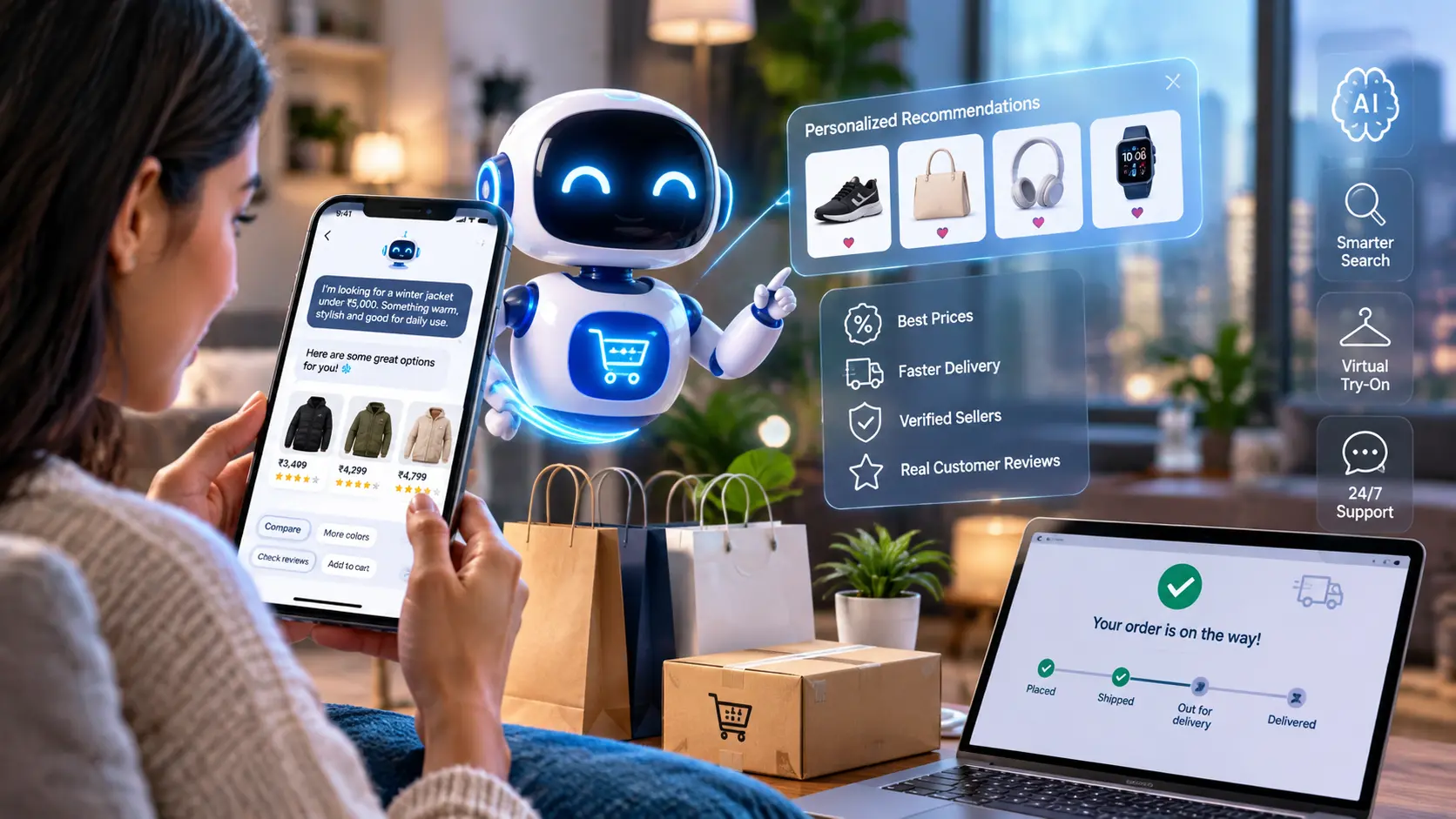
An AI shopping agent may be defined as a program that helps its user to shop by searching, comparing, reviewing items, tracking their prices, and sometimes even paying for them. A chatbot, by contrast, is a program that only answers questions. An agent is like a human assistant who never stops comparing thirty similar products in order to fulfill your request. You can instruct the chatbot to do this or that, but it will not be able to perform any actions apart from collecting the information you need. An agent, on the other hand, can go as far as making the purchase itself if you give it the Go Ahead.
How AI Shopping Agents Actually Work
Most agents follow a similar pattern:
- You state a goal. “Find me running shoes for flat feet under $120.”
- The agent searches. It pulls product data, reviews, and prices from a retailer’s catalogue or the wider web.
- It narrows the options. You get a short, ranked list instead of a wall of results.
- It tracks or acts. Some agents just recommend; others add items to your cart, monitor prices for weeks, or complete the purchase automatically once a price target is hit.
This is a genuine shift from the old “search, scroll, compare” routine. The agent absorbs the scrolling so you don’t have to.
Real Examples Shaping 2026
A few platforms are leading this shift, each with its own approach:
Amazon’s Alexa for Shopping (formerly known as Rufus) can research products, follow prices over 30, 90, or 365 days, and purchase an item when it reaches a target price. It can also read a photo of a handwritten shopping list and add them to a cart.
ChatGPT Shopping connects to a vast weekly user base and utilizes OpenAI’s Agentic Commerce Protocol to help discover and purchase products without leaving the chat.
Perplexity Shopping doesn’t include any ads and joins product research with checkout through PayPal and a ‘snap to shop’ visual search feature.
Industry experts predict $20.9 billion in AI-driven commerce for 2026 in terms of e-commerce sales, but this only represents the tip of the iceberg, with one in three shoppers saying that they would let AI make purchases on their behalf within the next five years, according to the latest e-commerce trends research from DHL.
Quick Comparison
| Platform | Best For | Checkout Style |
| Amazon Alexa for Shopping | Amazon catalogue deals & price tracking | Auto-buy within Amazon |
| ChatGPT Shopping | Wide, web-scale product discovery | Agentic Commerce Protocol |
| Perplexity Shopping | Ad-free research | PayPal checkout, visual search |
Why Shoppers Are Actually Using Them
They save real time. Comparing five retailers used to take twenty minutes; an agent does it in seconds.
They catch better prices. Price-tracking agents watch a product for weeks and buy only when it drops, something most of us never had the patience to do manually.
They cut through fake reviews. A good agent can summarise hundreds of reviews and flag patterns a human would miss while scrolling on a phone.
They handle repeat purchases. Reordering the same detergent or dog food every month is exactly the kind of task an agent can be set up to do without you thinking about it again.
What This Means for Online Retailers
If agents are the ones browsing, getting discovered by a human on Google is no longer the end goal. Being found and trusted by the algorithm is equally important, which means product data, reviews, and customer service must be clear, accurate, and efficient. As an agent, you won’t lead your customer to a store with poor return policies and slow delivery as you’re shopping for them and will always be focused on the end goal of their purchase.
The Trade-Offs Worth Knowing
It is not without its drawbacks. Until humans are comfortable sharing their credit card details with an autonomous agent, there are bound to be errors when it comes to matching products and prices. The agent is only as good as the information it is fed, meaning that an error in product or price listings will result in an error in recommendations. For now, it seems that most consumers are using agents to research products and then fall back on human judgment when it comes to buying anything that requires a larger investment.
Where This Is Heading
DHL’s internal 2026 trends report (based on the research of nearly 29,000 consumers in 29 countries) indicates that although consumers want AI assistance, they still want fast delivery and simple returns after the AI has done its job. In other words, the agent will change how you shop, but not what to expect when the package arrives.
Conclusion
AI shopping agents are no longer a novelty, they are a timesaving tool. Whether it be Amazon’s Alexa for Shopping notifying you of a lower price or ChatGPT Shopping finding three great options for you in ten seconds, the new tools can already do the work for you. Just try an AI for shopping on your next buy and see how much of the browsing you can cut out. Simply set a price, ask for a comparison, or describe what you need.
FAQs
What is an AI shopping agent?
An AI shopping agent is a tool that researches, compares, and sometimes buys products for you based on a goal you describe, rather than just answering a question like a basic chatbot.
Are AI shopping agents safe to use for buying things online?
They can be, as long as you use trusted platforms, set clear spending limits, and review any purchase before it’s finalised. Most platforms let you approve the final checkout step yourself.
Which AI shopping agents are most popular in 2026?
Amazon’s Alexa for Shopping (formerly Rufus), ChatGPT Shopping, and Perplexity Shopping are the three most widely used AI shopping agents right now.
Do AI shopping agents cost extra money to use?
Most are included free within the app or chatbot you’re already using, such as the Amazon app or ChatGPT, though some advanced features may sit behind a paid subscription tier.
Can AI shopping agents actually get me a better price?
Yes, in many cases. Agents that track prices over time can alert you or buy automatically when a product drops to your target price, something that’s hard to do manually.
Will AI shopping agents replace human shopping completely?
Not soon. Most people still want to see, touch, or personally decide on bigger purchases. Agents are currently best at research, comparison, and repeat, low-effort buys.