
Quick Answer
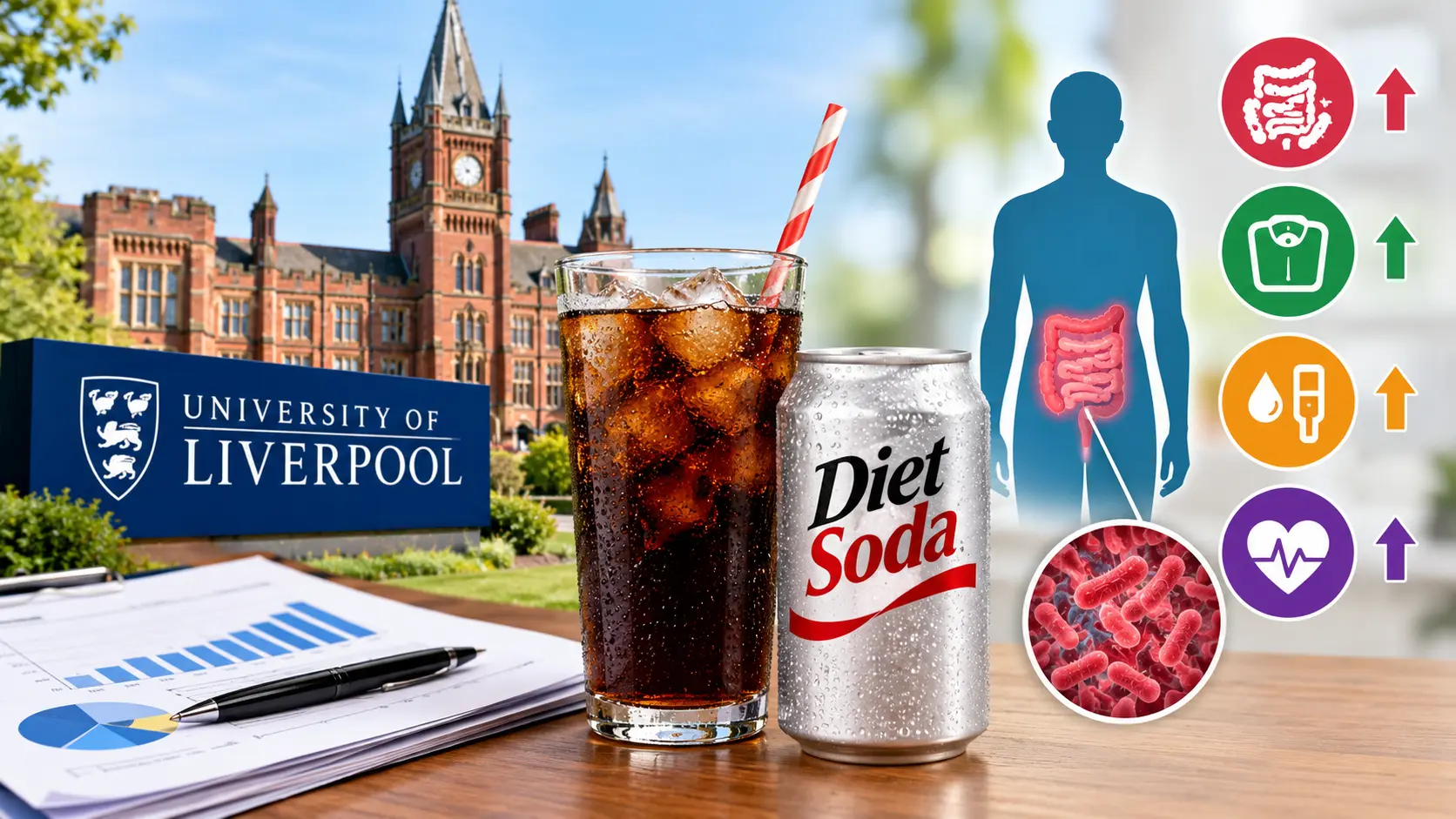
“University of Liverpool Diet Soda Study” findings reveal that a major two-year trial showed people who drank diet soda lost about the same amount of weight as those who only drank water—with an average weight loss of 4.8 kilograms (about 10.6 pounds) in the diet soda group versus 3.7 kilograms (about 8.2 pounds) in the water group, a gap too small to be statistically meaningful. The research also found no signs that diet soda increases appetite or causes long-term harm to your metabolism.
If you’ve ever wondered whether that can of diet cola is secretly working against your weight loss goals, this study offers some of the clearest, longest-running evidence yet. Let’s break down what researchers actually found — and what it means for your daily habits.
What Was the University of Liverpool Diet Soda Study?
Researchers at the University of Liverpool conducted the longest and most comprehensive randomized controlled trial investigating the impact of artificially sweetened drinks on body weight. The trial, named SWITCH (an acronym for “effects of non-nutritive sweetened beverages on appetite during active weight loss”), examined overweight or obese adults who drank either diet soda or water every day for two years. A significant finding of the study is that none of the participants who consumed artificially sweetened beverages gained weight or became heavier than they were at the beginning of the trial.
The research was published in the British Journal of Nutrition and involved a large sample of participants compared to many previous studies on the same topic, making its conclusions valuable. The study was led by University of Liverpool academics with the assistance of University of Leeds, Edge Hill University, and the UK Ministry of Defence. It was funded by the American Beverage Association, who the researchers said had no role in the conduct of the study or the analysis of the results.
How the Study Worked
Understanding the setup helps you trust the results. Here’s how researchers designed it:
Who took part: The trial started with 493 adults between the ages of 18 and 65, all with a body mass index between 27 and 35 (the overweight and obesity range).
What they drank: One group picked from 20 different diet drinks, including diet colas, flavored waters, and diet fruit drinks. The other group gave up all artificially sweetened drinks completely, including sweeteners added to coffee or tea.
The program: Everyone joined the same structured weight-loss program, with weekly group meetings for the first 12 weeks, then monthly check-ins for the rest of the first year.
The timeline: The last 52 weeks were voluntary, with no routine coaching, so researchers could see whether people kept the weight off on their own.
This kind of long, controlled setup is rare in nutrition research, which is exactly why health experts are paying close attention.
Key Findings From the SWITCH Trial
1. Diet Soda and Water Led to Similar Weight Loss
This is the headline result. Among the 220 participants who completed the full two-year trial, the diet soda group lost an average of 4.8 kg, while the water group lost 3.7 kg. Most of the weight loss happened in the first three months, with both groups hitting their lowest weight during year one before slowly regaining a little.
2. No Evidence of Increased Appetite
One of the biggest worries about diet soda is that the sweet taste might trick your brain into craving more food. This study pushes back on that idea. The trial was specifically designed to test whether replacing sugar with artificial sweeteners changes how the body regulates appetite, and the findings showed that concerns about sweeteners disrupting appetite or causing weight gain were not supported under rigorous, long-term testing.
3. Other Health Markers Held Steady
Both groups saw similar improvements in waist size, blood pressure, and cholesterol levels, and the reported results showed no clinically meaningful differences between groups on these measures.
4. Sugar Intake Dropped in Both Groups
Sugar intake went down for everyone in the study, though it dropped slightly more among people drinking diet beverages — likely because swapping a sugary soda for a diet one is an easy, low-effort change.
5. The Results Challenge Older Guidance
These findings stand in contrast to 2023 guidance from the World Health Organization, which had cautioned against using non-sugar sweeteners for weight control, citing uncertainty from earlier observational studies. Researchers behind SWITCH argue that some of that older data may have been skewed by reverse causality — meaning people who were already gaining weight were more likely to switch to diet drinks in the first place, making diet soda look worse than it actually was.
What Researchers Are Saying
Professor Jo Harrold, Dean of Psychology at the University of Liverpool, led the research alongside Professor Jason Halford of the University of Leeds. Harrold said the findings show that worries about sweeteners disrupting appetite or causing weight gain simply aren’t backed up when tested properly in a long-term trial. Halford added that the study fills a gap in long-term clinical evidence that had been missing from global discussions on sweeteners.
What This Means for You
If you’re trying to lose weight or cut back on sugar, this study suggests you don’t need to fear your diet soda habit. Here’s the practical takeaway:
- Swapping sugary drinks for diet versions is a reasonable strategy if plain water isn’t your thing.
- Diet soda isn’t a magic weight-loss tool — the researchers were clear that the results don’t mean sugar-free drinks alone cause weight loss, since participants were also following a structured behavioral program.
- Long-term, consistent habits (like the one tested here) matter more than any single drink choice.
As always, it’s smart to balance diet soda with water, whole foods, and regular movement rather than relying on any one beverage.
FAQ
Is diet soda bad for weight loss? No. According to this two-year trial, people who drank diet soda lost a similar amount of weight as people who drank only water, with no evidence it hurt their progress.
Does diet soda increase appetite or cravings? The study found no evidence that diet soda sweetened with aspartame, acesulfame potassium, or sucralose increased appetite or led to overeating.
Who funded the University of Liverpool diet soda study? The American Beverage Association funded the trial, but researchers stated the funder had no role in the study’s design, data collection, or results.
How long did the study last? The SWITCH trial ran for 104 weeks (two years), making it one of the longest randomized controlled trials on diet beverages to date.
Where was the study published? It was published in the peer-reviewed journal British Journal of Nutrition.