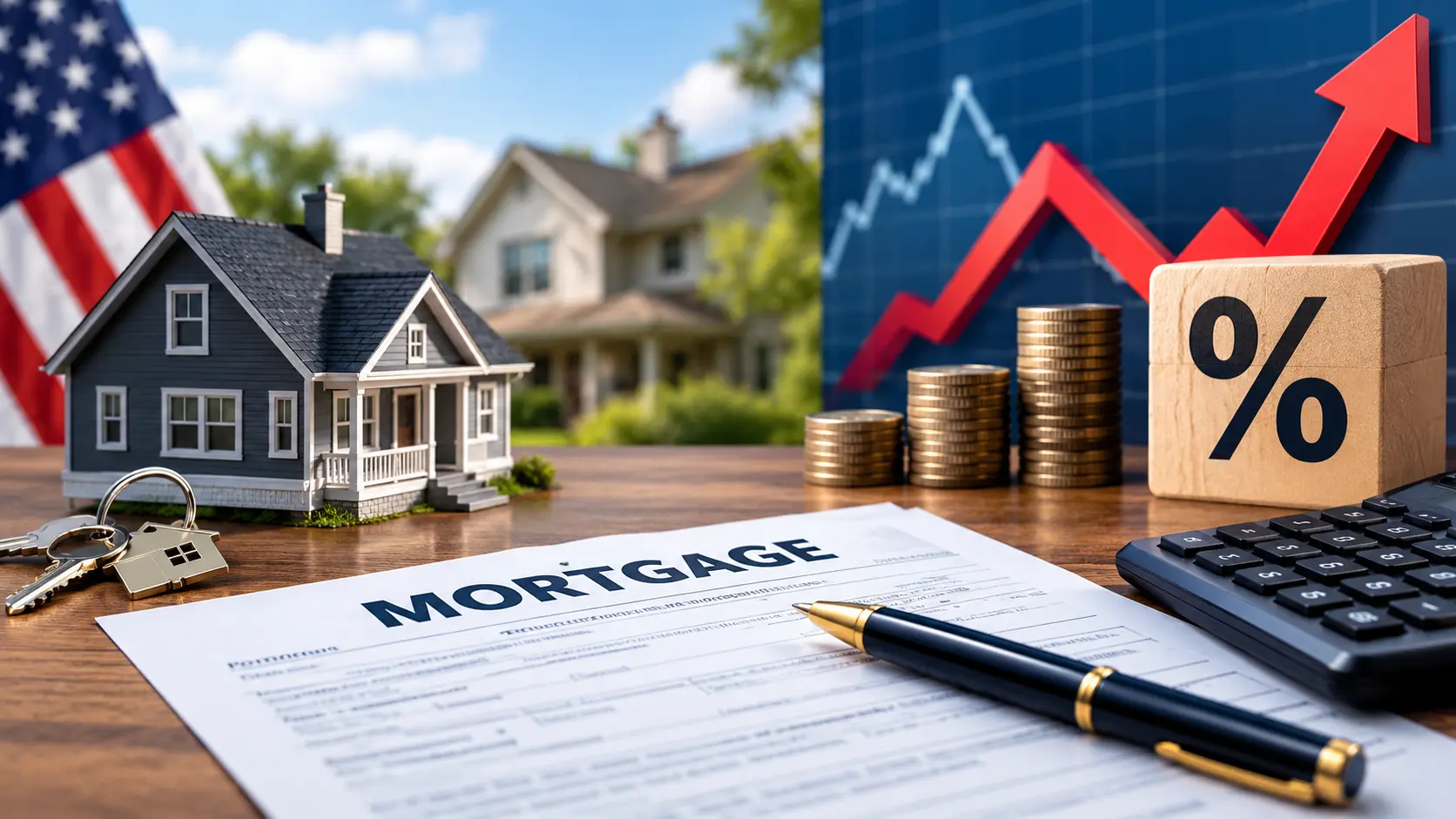

Quick Answer: The average 30-year fixed mortgage rate is running just above 7% as of late September 2026, the highest level in months. Rates climbed after the Federal Reserve raised its benchmark rate on September 16, 2026 — its first hike in years — which pushed up the bond yields that mortgage rates follow. Comparing offers from several lenders right now can still save you thousands of dollars, even while the overall rate environment stays elevated.
Mortgage rates today continue to fluctuate due to shifting economic conditions, inflation data, and Federal Reserve policies. Understanding mortgage rates today can help you decide whether now is the right time to buy a home or refinance your existing loan.
Check your mortgage rate last month and then do it again today and do not be surprised when the rate changes. As of late September 2026, the average 30-year fixed mortgage rate is at 7.04%. It has been changing day by day. Here are a few factors influencing the change and how much it will affect your monthly payment.
What Are Mortgage Rates Today?
As of September 20, 2026, average U.S. mortgage rates from Zillow’s lender marketplace data look like this:
- 30-year fixed: 7.04%
- 20-year fixed: 6.82%
- 15-year fixed: 6.42%
- 5/1 adjustable-rate mortgage (ARM): 7.04%
Refinance rates are near a fever pitch, averaging at 7.42 percent for 30 year terms. Based off of a weekly survey conducted by Freddie Mac, the Primary Mortgage Market Survey reflects an average rate across the week rather than an average of any single day. The 30 year rate averaged 6.76 percent as of September 11, according to the most recent survey period. While the exact rate may vary based upon different lender data panels and when you take the information, what every authority will tell you is that rates are up from earlier in 2026.
Why Are Mortgage Rates Changing Right Now?
The Fed Just Raised Its Benchmark Rate
The Federal Reserve’s rate-setting committee just concluded a meeting which ended on September 16, 2026. The central bank raised the federal funds rate by 0.25 percentage points, which means that the target range is now 3.75%-4%. The action comes after several years of rate cuts and is the first hike in the Fed’s history. The Federal Reserve does not directly set the mortgage rate, but changes in the fed funds rate affect the risk pricing of the bond market, and consequently, the mortgage rate.
Inflation Pressure Came Back
Rates had drifted below 6% earlier in 2026 before renewed inflation concerns, tied partly to geopolitical tensions, pushed borrowing costs back up. When investors expect higher inflation, they demand a bigger return on mortgage-backed bonds, and lenders pass that cost straight through to your rate.
Mortgage Rates Track Treasury Yields, Not the Fed Directly
This is a common misunderstanding. Mortgage rates tend to track more closely with the 10-year treasury yield, rather than the fed funds rate that the central bank is targeting. As a result, when investors begin to price in higher rates for an extended period of time, 10 year yields tend to rise (sometimes well in advance of any meeting) and mortgage rates follow.
30-Year vs. 15-Year: Which Actually Costs Less?
A shorter loan term means a higher monthly payment but far less interest paid over time. Here’s a rough side-by-side on a $300,000 loan at today’s average rates:
| Loan Term | Avg. Rate | Est. Monthly (P&I) | Trade-off |
|---|---|---|---|
| 30-year fixed | 7.04% | ~$2,000 | Lower payment, more total interest |
| 15-year fixed | 6.42% | ~$2,600 | Higher payment, paid off in half the time |
Figures are principal-and-interest estimates only; they exclude taxes, insurance, and HOA fees, which will add to your actual payment.
What This Means If You’re Buying a Home
- A higher rate raises your monthly payment for the same loan amount — even a 0.25% move matters on a $300,000+ loan.
- Lenders reserve their lowest conventional rates for borrowers with a credit score of 780 or above.
- Waiting for a ‘perfect’ rate is risky — you can refinance later if rates drop, but you can’t get back a house that sold while you waited.
What This Means If You Want to Refinance
- Refinance rates are currently running above purchase rates (about 7.42% vs. 7.04% for a 30-year loan).
- Refinancing only pays off if your new rate is meaningfully lower than your current one, once you factor in closing costs.
- Switching to a shorter term usually gets you a lower rate, but expect a noticeably higher monthly payment.
How to Get the Best Mortgage Rate Today
- Shop at least 3–5 lenders. LendingTree’s marketplace data suggests comparing offers can save borrowers more than $62,000 over the life of a 30-year loan.
- Push your credit score toward 780+ before you apply.
- Lower your debt-to-income ratio by paying down credit cards or other loans first.
- Compare APR, not just the headline interest rate — APR bakes in lender fees.
- Ask about points if you plan to stay in the home long enough to break even on the upfront cost.
Where Are Mortgage Rates Headed Next?
The Mortgage Bankers Association is projecting 30-year fixed rates to range from 6.6% to 6.7% through the end of 2026. Fannie Mae is a bit higher at 6.7%-6.8%. They both said rates would likely have to fall back to the 3% range that was common during the pandemic to happen. But that would likely take a severe economic downturn to get rates back to the mid-3% range that was common before the pandemic began.
Frequently Asked Questions
What is the average mortgage rate today?
As of late September 2026, the average 30-year fixed mortgage rate is around 7.04%, and the 15-year fixed averages about 6.42%. Rates can shift daily, so check a current source before locking one in.
Why did mortgage rates go up this week?
Rates rose mainly because the Federal Reserve raised its benchmark rate by 0.25 points on September 16, 2026, and because inflation pressure has been building. Both push up the bond yields that mortgage rates follow.
Will mortgage rates go down before the end of 2026?
Forecasters expect only a modest pullback. The Mortgage Bankers Association projects 6.6%–6.7% and Fannie Mae projects 6.7%–6.8% for the 30-year rate through the rest of the year — lower than today’s level, but not dramatically so.
Is 7% a bad mortgage rate?
Not by historical standards — rates averaged in the 6%–8% range for much of the 1990s and early 2000s. It only looks high compared with the unusually low rates of 2020–2021, which are unlikely to return without a major economic shock.
Should I wait for rates to drop before buying a house?
Timing the market rarely works out cleanly. Most lenders let you refinance later if rates fall, but home prices and available inventory can change while you wait, so there’s no guaranteed upside to delaying a purchase you’re otherwise ready to make.
What credit score do I need for the best mortgage rate?
Aim for 780 or higher to qualify for the most competitive conventional loan rates. Scores below that still qualify for a mortgage, just typically at a higher rate.
The Bottom Line
Mortgage rates are now higher than they were at the start of 2026, due to the Federal Reserve’s first rate hike in a long time and renewed fears about inflation. That doesn’t mean you can’t get a good deal; it just means that the loan you choose, the credit score you have, and the length of time you plan to carry the mortgage all have an impact on your rate. Compare several offers from different lenders this week before making a decision.