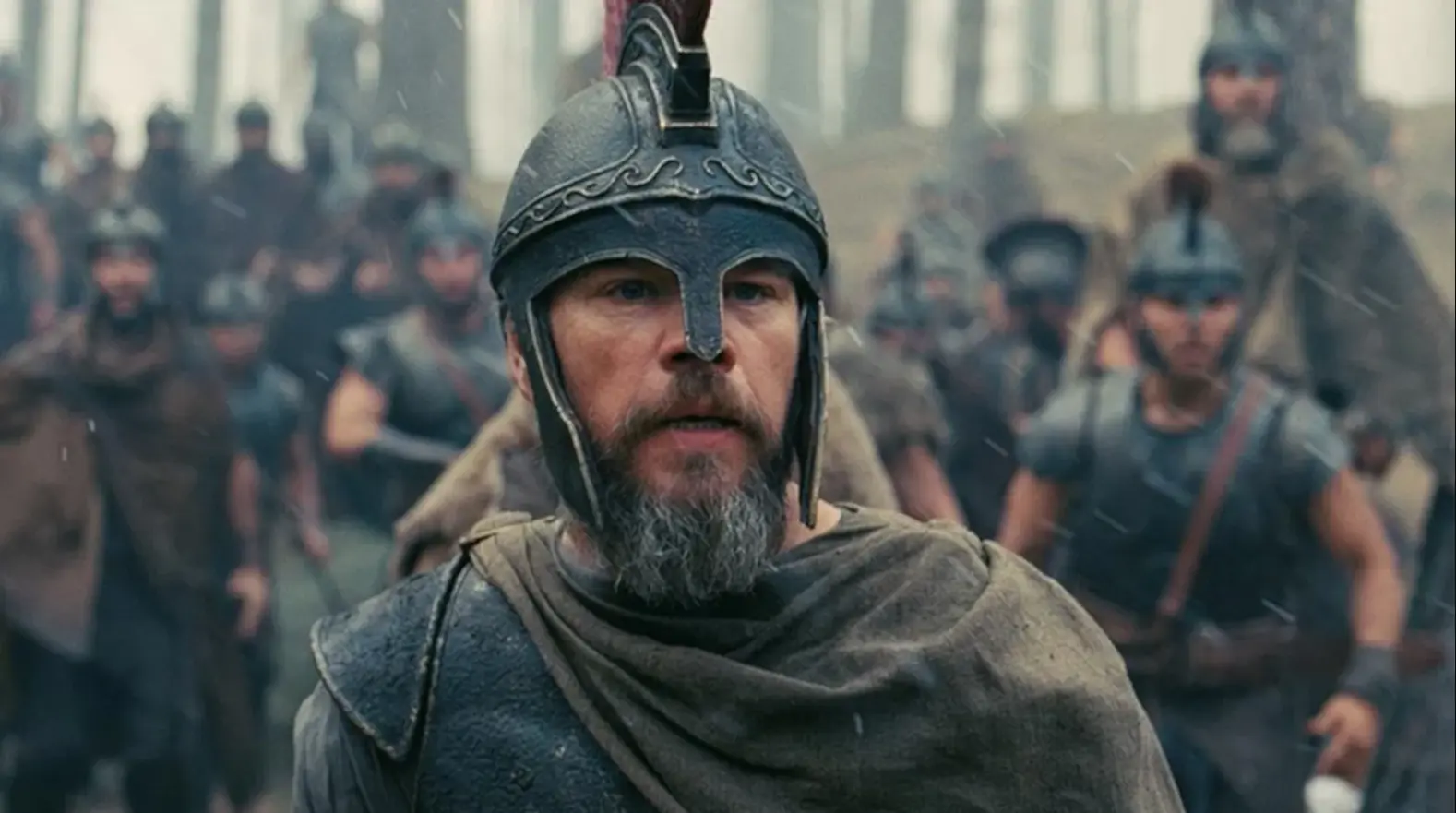

The reactions have been constant. Critics call it staggering. Fans call it monumental. Collider calls it a filmmaking feast. Variety calls it an astonishing achievement. The Hollywood Reporter says it might be Nolan’s biggest film to date. Each of these arrived within days of each other, all pointed at the same nearly three-hour movie.
Christopher Nolan’s “The Odyssey” opens in theaters on July 17, 2026, with early showings that started the afternoon before. It is his first film since “Oppenheimer,” the three-hour, R-rated biopic that made almost a billion dollars and won seven Academy Awards, including Best Picture, Best Director, Best Actor for Cillian Murphy, Best Supporting Actor for Robert Downey Jr., Best Original Score for Ludwig Göransson, Best Film Editing for Jennifer Lame, and Best Cinematography for Hoyte van Hoytema.
Universal is releasing this one too. IMAX tickets went on sale a full year in advance and sold out in minutes. That is not something that usually happens for an adaptation of a poem written around the eighth century B.C.
So the pitch sounds simple enough. Take Homer’s “Odyssey.” Hand it to the director who bent time in “Inception” and turned a bomb test into a horror movie in “Oppenheimer.” Shoot the entire thing on IMAX film cameras, a first for any movie in history. Sell it as the biggest theatrical event of the summer. Then watch what the reviews say.
What The Odyssey Actually Is
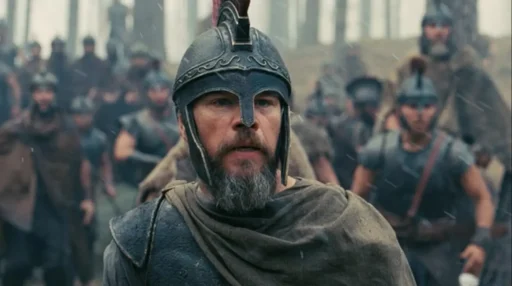
Matt Damon plays Odysseus, the Greek king trying to get home after the Trojan War. Anne Hathaway plays his wife Penelope, holding Ithaca together while suitors circle. Tom Holland plays their son Telemachus. Robert Pattinson, Zendaya, Lupita Nyong’o, Charlize Theron, Elliott Page, John Leguizamo, Himesh Patel, and Samantha Morton fill out a cast this large that trade publications have struggled to fit it into a single paragraph.
Even Travis Scott is in it, cast as a bard, a choice Nolan has explained by pointing to hip-hop’s roots in oral storytelling, the same tradition that carried Homer’s poem for centuries before anyone wrote it down.
The film runs two hours and 52 minutes, is rated R, and was shot across six countries. It had exclusive access to IMAX screens for its first three weeks. Reportedly, it’s also the most expensive production of Nolan’s career. None of that guarantees a good movie. It just explains why so many people showed up to the London and New York premieres expecting one.
The Reactions, In Their Own Words
The first wave of reactions landed the week of July 6, ahead of the wider review embargo, and they were almost uniformly glowing. Collider’s Perri Nemiroff called the film “a filmmaking feast” and “a grand and gripping rendition of Homer’s epic,” adding that it’s “sincerely hard to imagine any other filmmaker on the planet being able to bring that source material to screen with this much scale, scope and heart.” Journalist Ian Sandwell described it as “staggering,” built on “intense and spectacular set pieces” backed by “a soul-rattling score,” warning that “purists might baulk at the adaptation changes” but insisting “nobody is doing it like Nolan.”
The Los Angeles Times’ Joshua Rothkopf reached for a similar word, describing the film as “staggering,” “earthy, ghostly, weighty, touched by humor and grandeur alike,” and praising Nolan’s ability to make a movie that “flies” while still leaving audiences feeling they’ve lived through the characters’ journey. Variety’s Jazz Tangcay went with “astonishing achievement” and “triumphant, spectacular epic,” while the outlet’s awards writer Clayton Davis said Damon “leads with grit” and Holland “brings the sensitivity and heart,” calling it “another hit for Nolan, one his die-hards will digest for decades to come.”
Individual performances got their own spotlight. Fandango’s Erik Davis singled out Robert Pattinson’s villain turn as “conniving, manipulative and endlessly entertaining to watch,” calling the film overall “an absolute triumph and a crowning cinematic achievement from one of the great filmmakers of our time.” The Hollywood Reporter’s Aaron Couch, who has been seeing Nolan’s movies in theaters since “Memento,” pointed out something new even for a 25-year veteran of the director’s filmography: a fully realized horror sequence, apparently a first for Nolan. One reaction singled out Tom Holland’s performance as Telemachus as his best role to date, with Samantha Morton “stealing the show” in her limited screen time.
By the time the formal review embargo lifted, the tone hadn’t shifted much. Writers at The Hard Pass and Big Gold Belt Media called it, respectively, “Nolan’s crowning achievement” and “Nolan’s best work to date,” and Rotten Tomatoes’ own editorial roundup framed the early consensus around the idea that this is “one of the best films of the year.”
Not Everyone Is Fully Sold
A three-hour, six-country, IMAX-only adaptation of one of the oldest stories in Western literature was never going to land the same way for every critic in the room, and it hasn’t. Alongside the praise, Big Gold Belt Media’s Nagier Chambers offered a more clipped verdict, describing the film as “easier to respect than love, a technically staggering journey that never fully sweeps you out to sea.”
Even some of the enthusiastic reactions carried a caveat about the sheer amount of Homer that Nolan tries to compress into under three hours, and about how the film handles the poem’s fantastical elements next to real ancient history. That’s a fair question for a movie this ambitious. Trying to fit nearly all of “The Odyssey” onto a screen was always going to leave someone wanting a different two hours and fifty-two minutes.
Why Nolan, and Only Nolan
Strip away the superlatives and a pattern still holds across almost every reaction. Nobody is arguing that this is a small movie made carefully. They’re arguing that only one director working today would have tried to shoot the oldest adventure story in the Western canon entirely on IMAX film, cast it top to bottom with A-list actors, and bet a $250 million budget on the idea that audiences still want to sit in a theater for three hours without a phone in hand.
Universal is banking on the same thing “Oppenheimer” proved two years ago: that a serious, formally ambitious film can still be a genuine box office event. The early word suggests Nolan has done it again, just with sea monsters instead of a nuclear bomb. Whether “The Odyssey” ends up remembered the way “Oppenheimer” is remembered will take longer than a week of premiere reactions to settle. For now, the people who have actually seen it are telling anyone who’ll listen to buy the ticket.